

In a Netherlands authorities TV campaign called "Flip the Switch" a performer warns audience members about their power consumption.
"Whenever we all consume power at the same time, our electricity network gets overburdened," she says. "This can cause malfunctions. So, employ as minimal energy as possible between four and nine."
This represents a indication that, in one of the highly developed economies in the globe, an issue has gone wrong with the nation's power supply.
Electric Vehicle Adoption and Green Power Expansion
The Netherlands has been an enthusiastic adopter of electric cars. It boasts the greatest quantity of charging points per capita in the European continent.
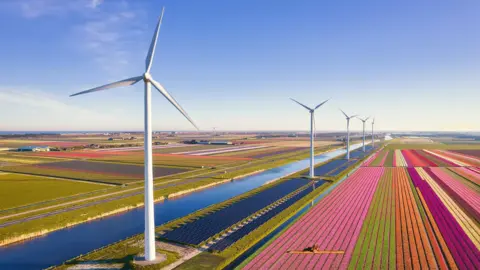
As for electricity production, this nation has replaced natural gas from its large North Sea resources with solar and wind.
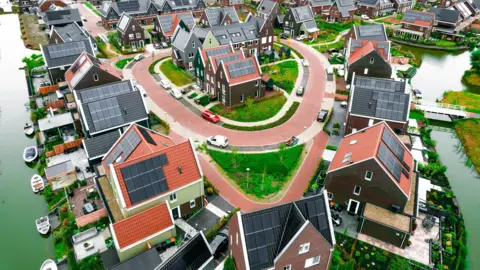
So much so that it leads the path in the region for the amount of photovoltaic panels per individual. Actually, more than one third of Netherlands households have solar panels installed.
This nation is also aiming for offshore wind farms to be its largest provider of power by 2030.
Network Congestion Issues
This is all good in ecological aspects, it's placing the Dutch national electricity grid under enormous stress, and in recent years there have been a number of outages.
The problem is "grid congestion", says Kees-Jan Rameau, chief executive of a Netherlands energy producer and supplier.
"Network overload is similar to a traffic jam on the electricity network. It's caused by either excessive power demand in a particular region, or too much power supply fed into the grid, beyond what the grid can manage."
The expert clarifies that the challenge is that the network "was created in the era when we had only a few of massive, mainly gas-fired energy facilities".
"Therefore we built a network with large transmission cables close to those generation sites, and progressively smaller cables as you got more towards the households.
"Currently we're transitioning to green energy, and that means there's a significant energy being fed into the grid in the outskirts of the network where there are only comparatively small cables."
And these limited cables are struggling to cope with the substantial power coming in from wind turbines and PV systems distributed around the country.
Specialist Analysis and EU-wide Situation
Damien Ernst, professor of electrical engineering at a European institution, is one of the continent's leading experts on power networks. He states it is an costly problem for the country to resolve.
"The Netherlands have a grid crisis because they didn't put money enough in their distribution networks, in their transmission networks, so they are facing bottlenecks everywhere, and it will take a long time and billions of euros to solve this."
The expert notes that it is a continental problem. "We have an enormous quantity of PV systems being deployed, and they are installed at a pace that is much, much too high for the network to be able to accommodate."
Management Approaches and Consumer Effects
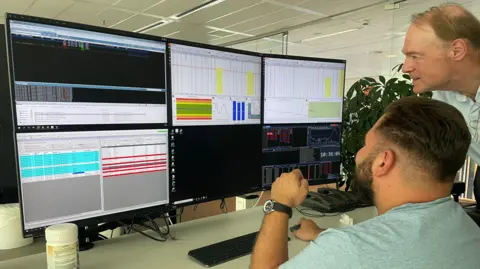
Within a leading energy company's main office in the port city, executives showcase a substantial monitoring system that the organization calls its "virtual power plant" and "the brain of our activities". It is employed to assist in balance the grid, avoiding blackouts.
When power production is excessive across the Netherlands, it allows energy companies to rotate wind turbines out of the breeze and turn off PV systems.
As for situations where consumption for power is peak, it lowers the energy to consumers who have accepted to permit providers to interrupt or limit their electricity supply when the grid is under strain in return for reduced rates.
But for homes and companies who wish to expand their use of electricity with a additional or bigger power link, that, increasingly, is simply not possible.
"Often customers want to set up a heat pump, or power up their electric vehicle at their residence, but that requires a significantly larger electricity link, and progressively they simply cannot get it," says the company representative.
The official continues that it is worse for companies. "Typically they want to expand their operations, and they just cannot receive additional capacity from the grid operators.
Moreover it has reached the stage where including residential development in the Netherlands is becoming progressively difficult, because there's just no available power to link those new neighbourhoods to the network."
These people, and companies, find themselves on queues for a several of years. Simultaneously there are also waiting lists for those who wish to supply the network with power, such as a new home equipped with PV systems on its roof.
Economic Impact and Future Plans
The government-owned organization that manages the Dutch national grid says that 8,000 businesses are currently in queue to be able to supply electricity, while 12,000 additional entities are waiting for permission to use additional power.
Some sectors of the Dutch economy are alerting that it is hindering their expansion. "Grid congestion is putting the long-term viability of the Dutch chemical sector at risk… while in different nations it will be easier to put money," states the President of a leading trade organization.
Therefore, was this situation avoidable? "Looking back I think nearly all issue is preventable," says the energy executive.
The official continues that following the 2015 climate accord on trying to address global warming, "we were very much focussing on increasing the renewable power generation aspect. But we somewhat didn't fully anticipate the impact it would have on the power grid."
The grid operator is now preparing to invest 200 billion euros on reinforcing the network, including installing approximately 100,000km of additional power lines between the present and 2050.
That's a massive amount of funding, but there is also a substantial economic impact to failing to invest it. Network overload is costing the Dutch economic system up to €35bn a annually, as per a recent report from a business consulting group.
An experienced representative in charge of network issues explains that patience is sadly required. "In order to improve and reinforce the network, we must double, threefold, sometimes expand ten times the capacity of the existing grid.
"And it's requiring on average about a decade to


